

Executive Summary
This case study examines a local SEO campaign involving a New York City healthcare provider offering immigration medical examinations and primary care services.
Operating in a competitive healthcare market, the provider sought to improve its online visibility and attract more prospective patients searching for relevant medical services.
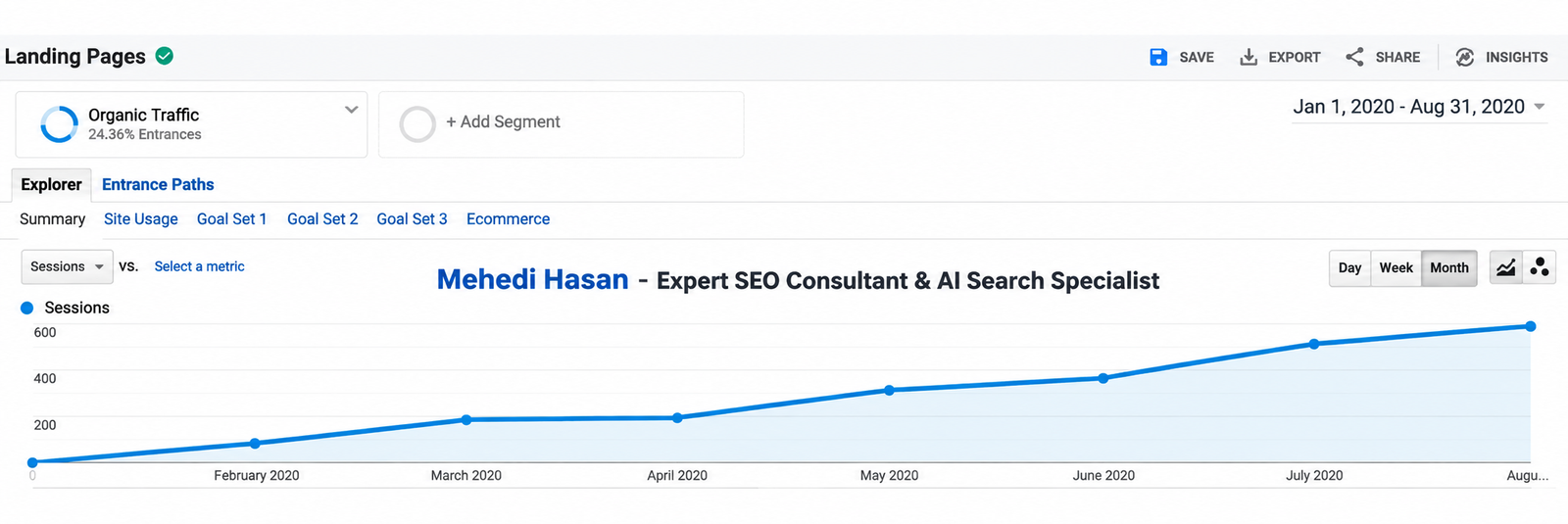
The published case study reports an 800% increase in local SEO traffic, demonstrating the potential impact of improving search visibility for geographically targeted healthcare services.
This analysis explores the business context, the SEO priorities relevant to the campaign, the reported outcome, and the measurement framework required to evaluate its commercial impact.
Client Background
The client was a healthcare provider based in New York City, serving patients who required primary care and immigration-related medical examinations.
These services depend heavily on location-specific searches. Prospective patients commonly search for providers based on the type of examination required, geographic convenience, availability, and trust.
For a healthcare provider, effective local SEO can connect these searches with accurate service information, location details, and appointment options.
Business Challenge
The provider’s stated objective was to improve online visibility and increase patient inflow.
Several competitive factors made this an important business priority.
Competitive local search environment: New York City has numerous healthcare providers competing for visibility across overlapping medical services and geographic areas.
Service-specific search intent: Immigration medical examinations and primary care attract different patient needs, requiring relevant and clearly differentiated service information.
Local discoverability: Prospective patients need to find the provider through location-specific Google searches and other local discovery channels.
Patient trust: Healthcare websites must communicate accurate information about services, qualifications, locations, and appointment procedures.
The central challenge was to strengthen the provider’s presence where potential patients were actively searching for care.
Campaign Objectives
The business objectives can be organized into four measurable areas:
- Increase organic visibility for relevant healthcare searches in New York City.
- Improve discoverability for immigration medical examinations and primary care services.
- Attract more qualified local visitors to the provider’s website.
- Increase opportunities for appointment inquiries and patient acquisition.
The first three objectives focus on search visibility and traffic quality. The fourth connects SEO activity to business outcomes.
SEO Strategy and Implementation Framework
The following workstreams represent an appropriate professional framework for a campaign of this type. They should not be interpreted as verified activities from the original engagement without supporting campaign records.
Phase 1: SEO Audit and Baseline Assessment
An effective campaign begins by reviewing existing search performance and identifying opportunities for improvement.
Key assessment areas include:
- Organic search traffic and landing-page performance.
- Existing keyword rankings for core medical services.
- Website crawlability, indexing, and technical health.
- Mobile usability and website performance.
- Google Business Profile completeness and accuracy.
- Local competitor visibility and content coverage.
The audit establishes a baseline against which subsequent improvements can be evaluated.
Phase 2: Local Keyword Research and Search Intent Mapping
Keyword research should prioritize searches that demonstrate a clear need for the provider’s services.
Illustrative keyword themes include:
- Immigration medical exam NYC.
- Immigration medical exam near me.
- Primary care doctor NYC.
- Immigration medical examination New York.
- Primary care clinic near me.
These are examples of relevant keyword opportunities, not verified ranking achievements from the original campaign.
Keywords should be grouped by service, geographic intent, and patient requirements, then mapped to suitable landing pages.
Phase 3: On-Page SEO and Service Content
Service pages should provide clear answers to the questions prospective patients ask before booking an appointment.
Potential improvements include:
- Descriptive title tags and meta descriptions.
- Clear page headings and service-specific content.
- Accurate information about medical examinations.
- Relevant location references.
- Internal links between related service pages.
- Clear appointment and contact options.
- Appropriate structured data for the healthcare organization.
Medical information must remain accurate, current, and consistent with the provider’s actual services and professional qualifications.
Phase 4: Google Business Profile and Local Visibility
For a location-dependent healthcare provider, Google Business Profile is an important patient discovery channel.
Optimization priorities include maintaining accurate business details, selecting relevant categories, presenting available services, and keeping operating hours and contact information current.
Local business listings should also consistently reflect the provider’s real-world name, address, and telephone number.
These measures support reliable discovery and reduce confusion for prospective patients.
Phase 5: Local Authority and Trust Development
Healthcare SEO requires credible, patient-focused information.
Relevant opportunities include publishing useful service guidance, presenting verified practitioner credentials, maintaining accurate business citations, and earning appropriate mentions from legitimate local organizations.
The objective is to make the provider easier to discover while giving patients sufficient information to evaluate its services.
Phase 6: Performance Monitoring and Optimization
Campaign performance should be reviewed using Google Search Console, website analytics, and available business-profile performance data.
Reporting should distinguish between:
- Organic website visits.
- Search impressions and clicks.
- Local keyword rankings.
- Google Business Profile interactions.
- Appointment inquiries.
- Confirmed patient bookings.
This distinction is essential because traffic growth does not automatically establish an equivalent increase in appointments or revenue.
Reported Campaign Results
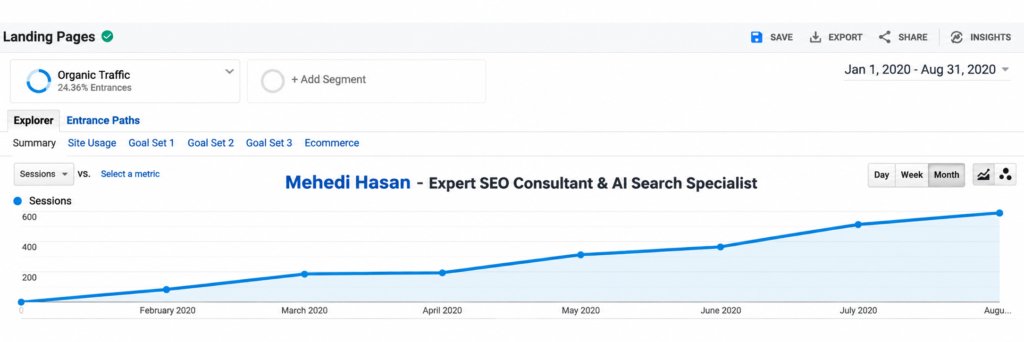
The publicly listed case study reports an 800% increase in local SEO traffic.
An 800% increase means that traffic reached nine times its original level during the comparison period.
For example, if baseline traffic were 100 visits, an 800% increase would produce 900 visits. This example illustrates the calculation and does not represent the healthcare provider’s actual traffic.
Performance Summary
| Metric | Reported Status |
| Local SEO traffic growth | +800% |
| Campaign start | Late February 2020 |
| Geographic market | New York City |
| Service focus | Immigration exams and primary care |
| Exact baseline traffic | Not independently verified |
| Exact final traffic | Not independently verified |
| Patient appointment growth | Not independently verified |
| Revenue growth | Not independently verified |
The traffic increase is the principal published performance claim. The underlying analytics, measurement period, and conversion results are required for a complete assessment.
Business Impact
Increased local search traffic can improve a healthcare provider’s opportunity to reach patients at the point when they are actively researching medical services.
For this particular campaign, the reported traffic growth suggests a substantial improvement in search-driven website reach.
However, the number of additional patients, confirmed appointments, and incremental revenue cannot be established from the information currently verified.
A complete business impact assessment would compare qualified organic leads, appointment bookings, conversion rates, and acquisition costs before and after implementation.
Key Lessons
Local search intent matters. Healthcare searches are often specific to a medical service and geographic location. Matching those needs with relevant content is more useful than attracting unrelated traffic.
Service pages should answer patient questions. Clear and accurate information can improve the usefulness of search landing pages and support appointment decisions.
Technical and local SEO serve different purposes. Technical optimization helps search engines access and understand website content, while local optimization improves the relevance and accuracy of the provider’s local presence.
Healthcare credibility is essential. Medical service information must be trustworthy, professionally reviewed where appropriate, and consistent with the services actually provided.
Business results require conversion measurement. Search traffic is an important performance indicator, but confirmed patient acquisition provides stronger evidence of commercial success.
Conclusion
This New York City healthcare SEO case illustrates the potential scale of traffic growth associated with a focused local search campaign.
The reported 800% increase is a significant visibility outcome. Its full business value, however, depends on the quality of that traffic and the number of additional patient inquiries and appointments it generated.
For healthcare organizations, an effective local SEO strategy should connect service-specific keyword targeting, technically accessible content, accurate business information, patient trust, and reliable performance measurement.