

1. Executive Summary
A Singapore-based online pet food retailer wanted to expand beyond its domestic market and establish a stronger international e-commerce presence.
However, the business faced several obstacles: limited organic visibility, insufficient website content, low domain authority, and technical constraints associated with its Shopify platform.
The SEO initiative focused on international domain migration, search-focused content development, product and collection page optimization, and improvements to the customer shopping experience.
Reported campaign outcomes included:
- 56.8% increase in organic users
- 38.5% increase in organic transactions
- 57.5% increase in organic search clicks
- 23.9% increase in search impressions
- 10.22% reported improvement in click-through rate
- 19% reported improvement in average search position
These results illustrate how coordinated technical, content, and e-commerce optimization can support stronger organic acquisition and commercial performance.
2. Client Background
The client was an emerging Singapore-based online retailer specializing in pet food and related products.
Initially operating under a Singapore-specific .sg domain, the company primarily served domestic customers.
As the business developed, management identified opportunities to reach international buyers and compete for a broader range of commercially relevant search queries.
The company needed a search strategy capable of supporting international expansion while improving product discovery and the shopping experience.
3. Business Challenges
Challenge 1: Limited International Reach
The existing country-code domain was closely associated with the Singapore market. Expanding internationally required a carefully planned domain transition and updated geographic targeting strategy.
Challenge 2: Shopify Technical Limitations
The Shopify platform presented restrictions around certain technical SEO configurations, including sitemap management.
These constraints required an optimization approach that worked within the platform’s available controls.
Challenge 3: Insufficient Content and Authority
The website had relatively little content and limited established authority.
This made it harder to compete for relevant non-branded searches and establish credibility in the pet nutrition category.
Challenge 4: Weak Non-Branded Search Visibility
The business needed to reach prospective customers who were searching for products and pet nutrition information without already knowing the brand.
Challenge 5: Product Discovery and Conversion
Improving organic traffic alone would not guarantee commercial growth.
The website also needed a clearer product browsing experience that helped customers navigate collections, evaluate products, and complete purchases.
4. SEO Strategy and Implementation
Phase 1: International Domain Migration
The campaign included transitioning the website from its Singapore-specific .sg domain to a .com domain.
The objective was to support the company’s broader international positioning.
From an SEO perspective, successful domain migration requires attention to URL mapping, redirects, canonical signals, internal links, indexing, and post-migration performance.
The original case study confirms the domain transition but does not document every technical migration step.
Phase 2: Keyword Research and Search Intent Optimization
Keyword research focused on identifying commercially relevant opportunities for product and collection pages.
The strategy emphasized:
- Product-specific search terms
- Collection and category keywords
- Non-branded commercial queries
- Informational searches related to pet food and nutrition
- Search intent alignment across important landing pages
This approach aimed to connect the retailer’s product catalog with relevant customer demand.
Phase 3: Content Quality and Topical Authority
The website’s content was expanded and improved to provide more useful information for potential buyers.
A key element involved collaboration with nutritional experts to strengthen the credibility of pet nutrition content.
The broader objective was to build trust, improve topical relevance, and support organic discovery across the customer journey.
Phase 4: Shopify On-Page SEO
Product and collection pages were optimized around relevant keyword opportunities.
The campaign concentrated on improving search relevance and strengthening the visibility of commercially important pages.
This work complemented the broader content development strategy.
Phase 5: Local Search Optimization
The campaign also included optimization of the company’s Google Business Profile, formerly Google My Business.
This supported the business’s local search presence while its website strategy expanded toward international markets.
Phase 6: User Experience and Conversion Optimization
The shopping experience was refined, particularly across product category and collection pages.
The goal was to make product discovery easier and reduce friction in the buying process.
These changes supported the campaign’s commercial objective: turning organic visitors into paying customers.
5. Campaign Results
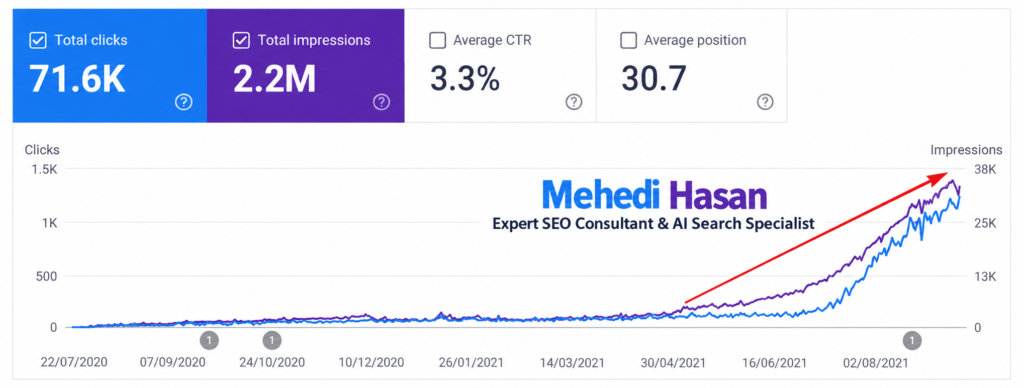
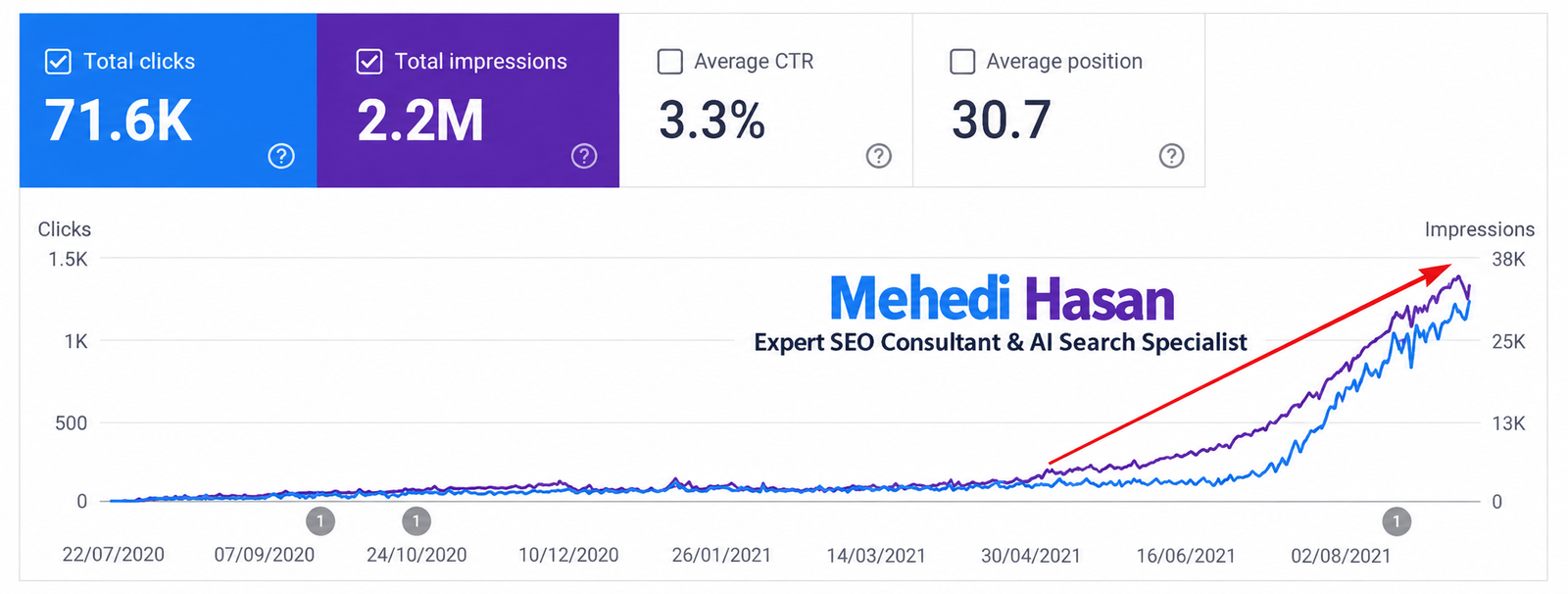
The original case study reports improvements beginning in April 2021.
| Performance Indicator | Reported Improvement |
| Organic Users | +56.8% |
| Organic Transactions | +38.5% |
| Organic Search Clicks | +57.5% |
| Search Impressions | +23.9% |
| Click-Through Rate | +10.22% |
| Average Search Position | 19% improvement |
Organic Audience Growth
Organic users increased by 56.8%, indicating that the website attracted a larger audience through unpaid search.
This growth was consistent with the campaign’s focus on expanding keyword coverage, improving search visibility, and strengthening content relevance.
Increased E-Commerce Transactions
Organic transactions increased by 38.5%.
This was a particularly important outcome because it connected the SEO initiative to actual purchase activity rather than traffic growth alone.
However, transaction growth should not be confused with revenue growth. The source does not provide revenue, average order value, or profit data.
Improved Search Visibility
Search impressions increased by 23.9%, while organic clicks increased by 57.5%.
The stronger growth in clicks suggests that the website became more effective at attracting visits from search results.
Better Search Engagement
The source reports a 10.22% improvement in CTR and a 19% improvement in average search position.
These figures suggest stronger organic search performance, although the original article does not clarify whether the CTR change represents a relative percentage increase or a change in percentage points.
6. Business Impact
The SEO campaign was associated with three commercially meaningful developments.
Greater market visibility: The retailer improved its organic search presence while working toward a broader international audience.
More qualified customer acquisition: Optimized product and collection pages helped the website reach customers searching for relevant products.
Stronger commercial outcomes: Growth in organic transactions demonstrated that improved search performance was accompanied by increased purchasing activity.
Together, these outcomes indicate that the initiative contributed to both customer acquisition and e-commerce performance.
7. Key Lessons
This case highlights several principles relevant to Shopify businesses.
International expansion requires technical planning. A domain migration should be treated as a structured SEO project, not simply a branding change.
Content credibility matters. Expert-informed content can strengthen the usefulness and trustworthiness of information in specialist product categories.
Collection pages are important acquisition assets. Effective keyword targeting can help category and product pages capture commercial search demand.
SEO should be evaluated against business results. Organic users, search clicks, and impressions matter, but transaction growth provides a more direct measure of commercial impact.
User experience supports search performance. Clear product navigation and a better shopping experience can help businesses make more effective use of the traffic they acquire.
8. Conclusion
This Shopify SEO case study demonstrates how a coordinated approach to international expansion, technical optimization, content development, and e-commerce user experience can support measurable growth.
The reported improvements of 56.8% in organic users, 57.5% in search clicks, and 38.5% in organic transactions show the potential value of aligning SEO activity with commercial objectives.
For Shopify businesses seeking sustainable organic growth, the central lesson is to connect search visibility with product discovery, customer trust, and measurable sales activity.