

1. Executive Summary
This case study examines how a strategic SEO and content optimization campaign helped an established dog supplement e-commerce business significantly increase its organic search visibility.
Despite operating since 2017, the business struggled to generate meaningful organic traffic and achieve competitive keyword rankings. Its existing website content was not performing effectively in search results, limiting opportunities to reach potential customers searching for dog health and supplement solutions.
The SEO campaign focused on evaluating existing content, improving keyword targeting, aligning pages with user search intent, and developing a more relevant content strategy.
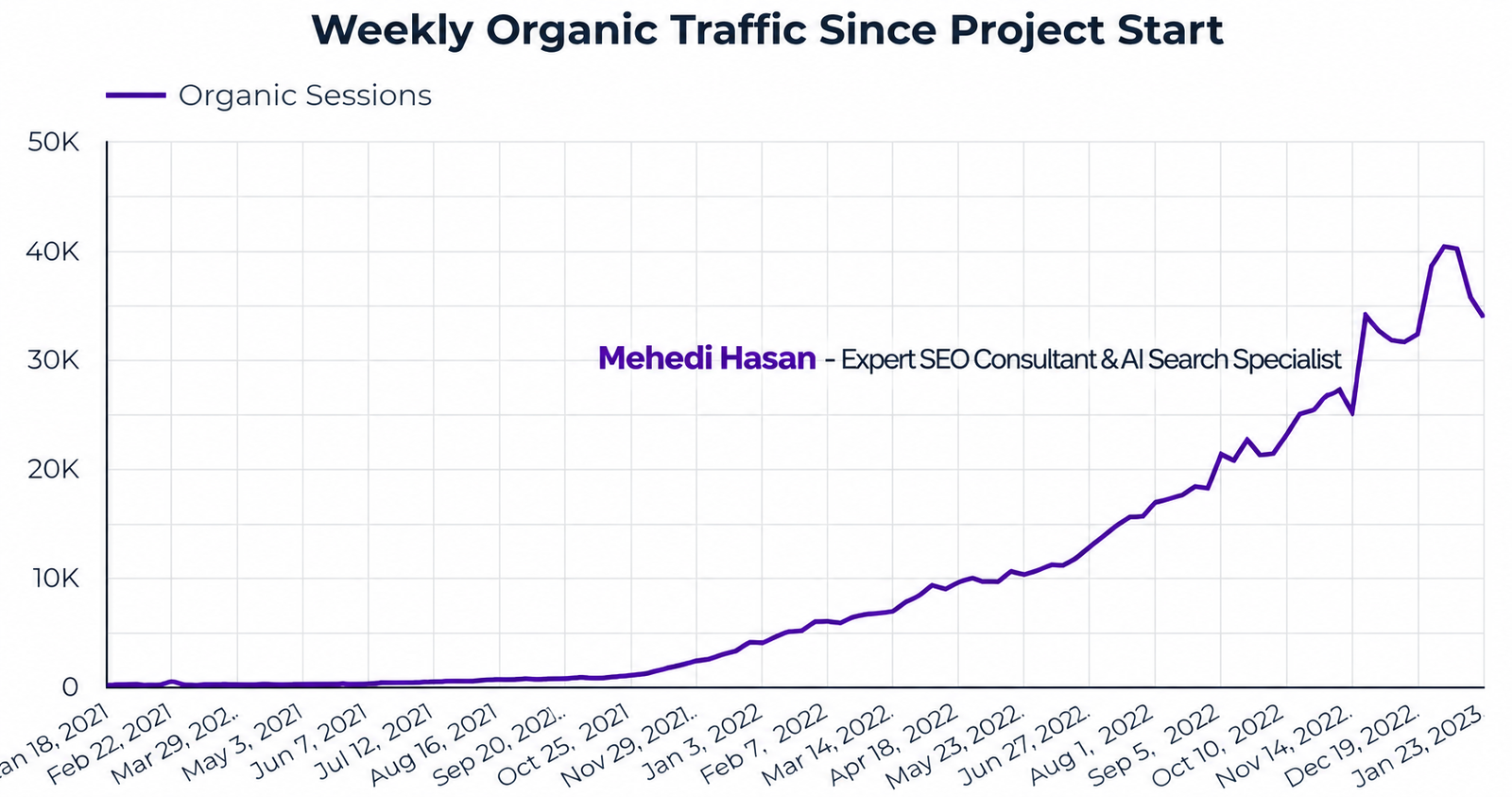
By February 2022, the website had increased its reported monthly organic sessions from 2,951 to 166,853 and achieved top-three search rankings for 2,538 keywords.
Key Performance Highlights
| Performance Metric | Initial Position | Reported Result |
| Monthly Organic Sessions | 2,951 | 166,853 |
| Organic Traffic Growth | Baseline | +5,554% |
| Top 3 Ranking Keywords | 0 | 2,538 |
| Additional Monthly Sessions | Baseline | +163,902 |
| Campaign Timeline | March 2021 | February 2022 |
2. Client Background
The client was an established e-commerce company specializing in clean dog supplements and pet wellness products.
Founded in 2017, the business focused on providing supplement solutions for dog owners who wanted to support their pets’ health and well-being.
Although the company had an established product offering, its website struggled to attract relevant organic search traffic.
This created a significant gap between the company’s commercial potential and its online visibility.
Business Challenges
The initial assessment identified several core areas requiring attention:
- Limited organic visibility: The website attracted only 2,951 monthly organic sessions at the beginning of the engagement.
- Weak keyword performance: No tracked keywords occupied the top three positions in search results.
- Content relevance: Existing content required improvement to address customer questions and search intent more effectively.
- Competitive search environment: The business needed greater visibility for relevant pet health and dog supplement topics.
- Customer acquisition: The website needed to reach more potential customers through unpaid search traffic.
The central challenge was to improve search visibility while attracting visitors whose interests aligned with the company’s products.
3. Project Objectives
The SEO campaign was designed around four primary objectives.
Objective 1: Increase Organic Search Traffic
Improve the website’s ability to attract relevant visitors through search engines without relying exclusively on paid advertising.
Objective 2: Improve Keyword Rankings
Increase the number of relevant keywords appearing in prominent search positions, particularly the top three results.
Objective 3: Strengthen Content Relevance
Optimize existing content and develop a search-focused content strategy that addressed the needs, questions, and interests of dog owners.
Objective 4: Establish Sustainable Organic Visibility
Develop a stronger foundation for long-term organic discovery through improved content quality, keyword targeting, and search relevance.
4. SEO Strategy and Implementation
The campaign used a structured approach centered on content optimization, keyword research, and search-intent alignment.
Phase 1: SEO Audit and Performance Assessment
The first stage involved evaluating the website’s existing search performance and identifying areas where content improvements could support stronger rankings.
The assessment focused on understanding the website’s starting position, existing content relevance, and opportunities to improve organic search visibility.
The initial performance benchmark was established at 2,951 monthly organic sessions, with no tracked keywords ranking in the top three positions.
This baseline provided a reference point for evaluating subsequent growth.
Phase 2: Keyword Research and Search Intent Analysis
Keyword research was central to the SEO strategy.
The campaign focused on identifying search topics related to dog supplements, pet wellness, and common questions from dog owners.
Rather than focusing exclusively on broad keywords, the strategy emphasized matching content with the information potential customers were actively searching for.
The intended outcomes included:
- Greater relevance for pet health-related search queries.
- Better alignment between page content and search intent.
- Improved opportunities to rank for relevant informational and commercial topics.
- Stronger visibility among audiences interested in dog supplement products.
This approach connected the website’s content with the interests of its target audience.
Phase 3: Existing Content Optimization
The next stage focused on improving the website’s existing content.
Pages were reviewed and revised to address customer concerns more directly and communicate information more effectively.
The goal was to improve the usefulness and relevance of content while supporting stronger organic search performance.
The content optimization effort emphasized clarity, topical relevance, and alignment with targeted search queries.
Phase 4: SEO Content Strategy
A broader content marketing strategy was developed to support organic search growth.
The strategy concentrated on topics relevant to dog owners and their interests in pet health, wellness, and supplementation.
By developing content around these topics, the website could compete for a wider range of relevant search queries and improve its presence across the customer research journey.
The campaign sought to position the business as a more visible source of information within its product category.
5. Campaign Results and Performance Analysis
By February 2022, the website had achieved substantial reported improvements in organic search traffic and keyword visibility.
Organic Traffic Growth
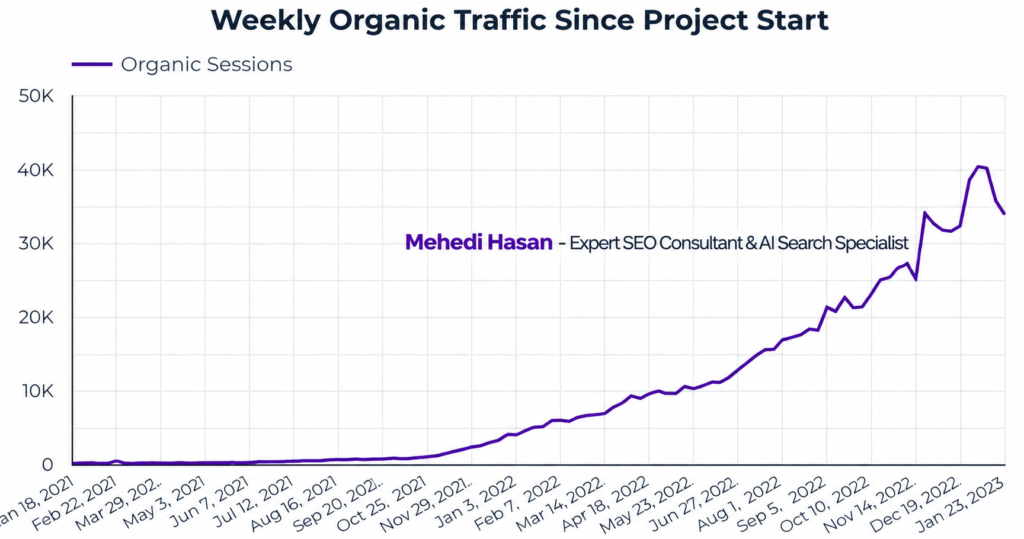
At the beginning of the campaign, the website generated approximately 2,951 monthly organic sessions.
By the reported endpoint, monthly organic sessions had increased to 166,853.
This represented:
- 163,902 additional monthly organic sessions
- Approximately 5,554% growth
- Approximately 56.5 times the initial traffic level
These figures demonstrate a substantial increase in organic search exposure over the reported campaign period.
Keyword Ranking Improvements
Keyword rankings also improved significantly.
At the beginning of the campaign, none of the tracked keywords appeared in the top three search positions.
By February 2022, the website had achieved top-three rankings for 2,538 keywords.
This expansion in prominent keyword rankings increased the website’s potential to attract search traffic from relevant queries.
Business Impact
The reported growth indicates that the website became substantially more discoverable through organic search.
The original case study also describes an overall improvement in sales conversions, although it does not provide conversion rates, revenue figures, or transaction data.
For this reason, the verified scope of the published performance figures is organic traffic and keyword visibility, rather than a quantified increase in sales.
6. Challenges and Lessons Learned
One notable development was a website redesign that reportedly caused a temporary decline in organic traffic.
Despite this disruption, the reference case study states that the website maintained an overall improvement compared with its initial performance.
The project highlights several important SEO lessons.
Content relevance matters. Addressing real customer questions helps create a stronger connection between search queries and website content.
Keyword strategy should reflect user intent. Effective SEO requires understanding what potential customers are looking for, rather than simply targeting search volume.
Existing content can be a valuable growth opportunity. Improving current pages can be an important component of an organic growth strategy.
Website changes require careful SEO management. Redesigns can affect organic performance, making monitoring and technical continuity important.
Performance should be measured using multiple indicators. Organic sessions and keyword rankings provide useful evidence of search visibility, while conversion and revenue data are needed to evaluate commercial impact.
7. Key Takeaways
This project demonstrates how an established e-commerce business can achieve substantial improvements in organic search visibility through a focused SEO and content strategy.
The campaign’s most significant reported outcomes were the increase from 2,951 to 166,853 monthly organic sessions and the achievement of 2,538 top-three keyword rankings.
The results illustrate the potential value of aligning website content with relevant search demand and consistently improving content relevance.
They also reinforce the importance of establishing a clear performance baseline and evaluating SEO outcomes using measurable indicators.
8. Conclusion
The reported campaign shows how a business with limited search visibility can achieve significant organic growth through a structured approach to SEO.
By focusing on keyword relevance, content optimization, and customer search intent, the website expanded its organic reach and improved its competitive position in search results.
The project offers a useful example of the role SEO can play in increasing discoverability for an established e-commerce brand.