


Executive Summary
Google’s May 2020 Core Update created a major organic search visibility challenge for an established e-commerce business operating in a competitive adult-products market.
Following the algorithm update, the website experienced declining rankings for valuable commercial keywords, affecting organic traffic and revenue performance.
The published recovery strategy focused on four interconnected areas: search intent alignment, on-page content optimization, business credibility, and backlink profile improvement.
The reported results demonstrated a significant turnaround in organic search performance, with annual organic traffic increasing by 90.6%, transactions growing by 40.8%, and organic revenue rising by approximately 53.23%.
This case study examines the underlying challenges, the reported optimization approach, and the business impact of the recovery campaign.
1. Project Background
Client: Confidential e-commerce business
Market: Competitive online retail
Industry: Adult products and accessories
Primary Acquisition Channel: Google Organic Search
Trigger Event: May 4, 2020 Google Core Update
Before the algorithm update, the business had established meaningful organic visibility across competitive commercial search terms.
However, the May 2020 update coincided with a substantial decline in first-page keyword rankings and search traffic.
The challenge extended beyond recovering individual keywords. The website needed a more consistent approach to matching search intent, presenting credible business information, and maintaining a trustworthy backlink profile.
2. Business Challenges
Challenge 1: Search Intent Misalignment
Several website pages targeted keywords representing different stages of the customer journey.
Informational searches, product comparisons, and purchase-focused queries were not always supported by appropriately structured landing pages.
This weakened the relevance of individual pages and created potential keyword cannibalization.
Challenge 2: Insufficient Trust and Credibility Signals
The website operated as a legitimate online retailer but did not consistently communicate its business identity and subject-matter expertise.
Missing or underdeveloped business information, author credentials, and supporting trust elements made the site’s credibility harder for visitors to assess.
Challenge 3: Low-quality Backlink Exposure
The backlink audit identified links associated with outdated link-building practices.
These included placements on websites openly advertising guest posting or link sales.
The concern was that manipulative or irrelevant backlinks could create unnecessary search quality and compliance risks.
3. SEO Recovery Objectives
The recovery initiative addressed four principal objectives:
- Restore organic visibility for commercially valuable keywords.
- Improve the alignment between landing pages and user search intent.
- Strengthen the website’s business credibility and content quality.
- Improve organic transactions and revenue through sustainable search performance.
4. SEO Recovery Strategy
Phase 1: Search Intent Analysis and Keyword Mapping
The recovery approach began by evaluating the relationship between target keywords, existing landing pages, and Google’s search results.
Keywords were reviewed according to the type of content users expected to find.
Informational queries were distinguished from commercial and transactional searches.
Existing pages were then reviewed to identify mismatches between their content and intended keyword targets.
The objective was to ensure that each important page served a clear search purpose rather than attempting to rank for unrelated keyword groups.
Strategic significance: Better intent alignment can improve page relevance, reduce internal keyword competition, and help visitors reach content that matches their needs.
Phase 2: On-Page Content Optimization
After clarifying keyword intent, the campaign focused on improving existing content.
The reported methodology used competitive content analysis to evaluate how important landing pages compared with pages already performing well in search results.
Optimization work included reviewing content coverage, relevant terminology, and the information required to satisfy target queries.
The objective was to improve content usefulness and topical relevance without changing the commercial purpose of the website.
Strategic significance: Content improvements are most valuable when they address genuine user needs rather than simply increasing keyword frequency or page length.
Phase 3: Strengthening Expertise and Business Trust
The campaign also addressed the website’s credibility.
Reported improvements included developing author information, publishing professional background details, linking relevant external profiles, and adding structured data.
Business identity information was made more visible through website content and appropriate organizational markup.
The recovery approach also incorporated third-party reputation information to help customers assess the retailer’s legitimacy.
Strategic significance: Clear authorship, accurate business details, transparent policies, and credible reputation signals help customers evaluate an online store.
Phase 4: Backlink Profile Review and Remediation
The backlink strategy focused on identifying potentially manipulative links and improving the quality of the website’s external link profile.
The reported work included reviewing referring domains, examining questionable link placements, and submitting a disavow file.
The campaign also pursued new backlinks from relevant websites with established organic visibility.
Strategic significance: Backlink management should prioritize editorial relevance, legitimacy, and compliance with Google’s spam policies rather than raw link volume.
5. Campaign Performance and Results
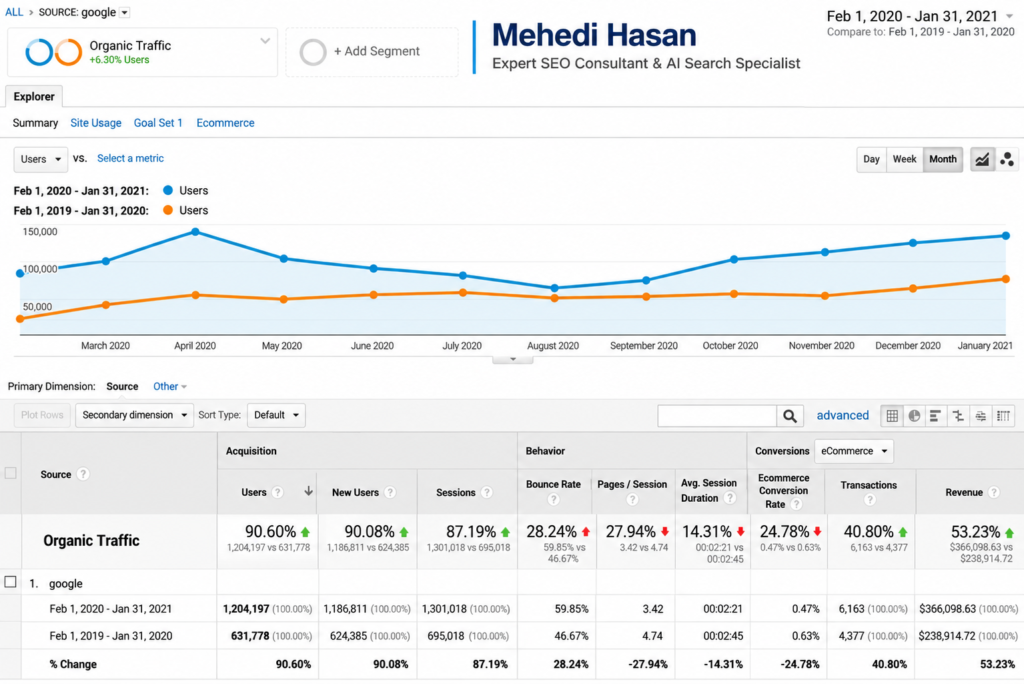
The published case study reported the following year-over-year performance:
| Performance Indicator | Before | After | Reported Growth |
| Annual Organic Traffic | 631,778 | 1,204,197 | +90.6% |
| Annual Transactions | 4,377 | 6,163 | +40.8% |
| Annual Organic Revenue | $238,914 | $366,098 | +53.23% |
Organic Traffic Growth
Annual organic traffic increased by 572,419, representing approximately 90.6% growth.
This suggests that the website regained substantial search visibility and expanded its ability to attract visitors through unpaid search results.
Transaction Growth
Annual transactions increased by 1,786, equivalent to approximately 40.8%.
This indicates that the reported recovery extended beyond visitor acquisition and coincided with increased purchasing activity.
Revenue Growth
Annual organic revenue increased by $127,184, representing approximately 53.23% growth.
The revenue increase exceeded transaction growth, indicating that average revenue per transaction also improved during the comparison period.
6. Business Impact
The published results demonstrate three important business outcomes.
Improved Search Visibility
The recovery campaign was associated with a substantial increase in organic traffic following the algorithm-related decline.
Higher Commercial Activity
Transaction growth indicates that the website attracted additional purchasing activity, not simply more search visitors.
Stronger Organic Revenue Contribution
The increase in organic revenue suggests that the search channel became a more valuable contributor to overall e-commerce performance.
Although the case study reports positive outcomes, the available evidence does not isolate the effect of each SEO activity from other influences such as market demand, product pricing, seasonality, and conversion changes.
7. Key Lessons
Search intent should guide page optimization.
A page’s purpose must align with the expectations of users searching for its target keywords.
Business credibility matters.
Transparent company information, accurate author credentials, and reliable customer-facing policies help establish confidence.
Content quality requires more than keyword optimization.
Effective content must answer relevant questions, support purchase decisions, and provide meaningful value.
Backlink quality is more important than backlink quantity.
A sustainable link strategy focuses on legitimate editorial references rather than artificial placements.
SEO performance should be evaluated through business outcomes.
Traffic growth is useful, but transactions and revenue provide a clearer view of commercial impact.
8. Conclusion
This published recovery campaign illustrates how coordinated improvements in content relevance, website credibility, and backlink quality can support an e-commerce website following a major search algorithm update.
The reported outcomes included 90.6% annual organic traffic growth, 40.8% more transactions, and approximately 53.23% higher organic revenue.
The central lesson is that effective SEO recovery requires a structured diagnosis and improvements aligned with both search intent and customer needs.