

Executive Summary
Building a strong organic search presence in the pharmaceutical industry requires more than targeting competitive keywords. It demands a structured approach to technical performance, content relevance, website architecture, and information credibility.
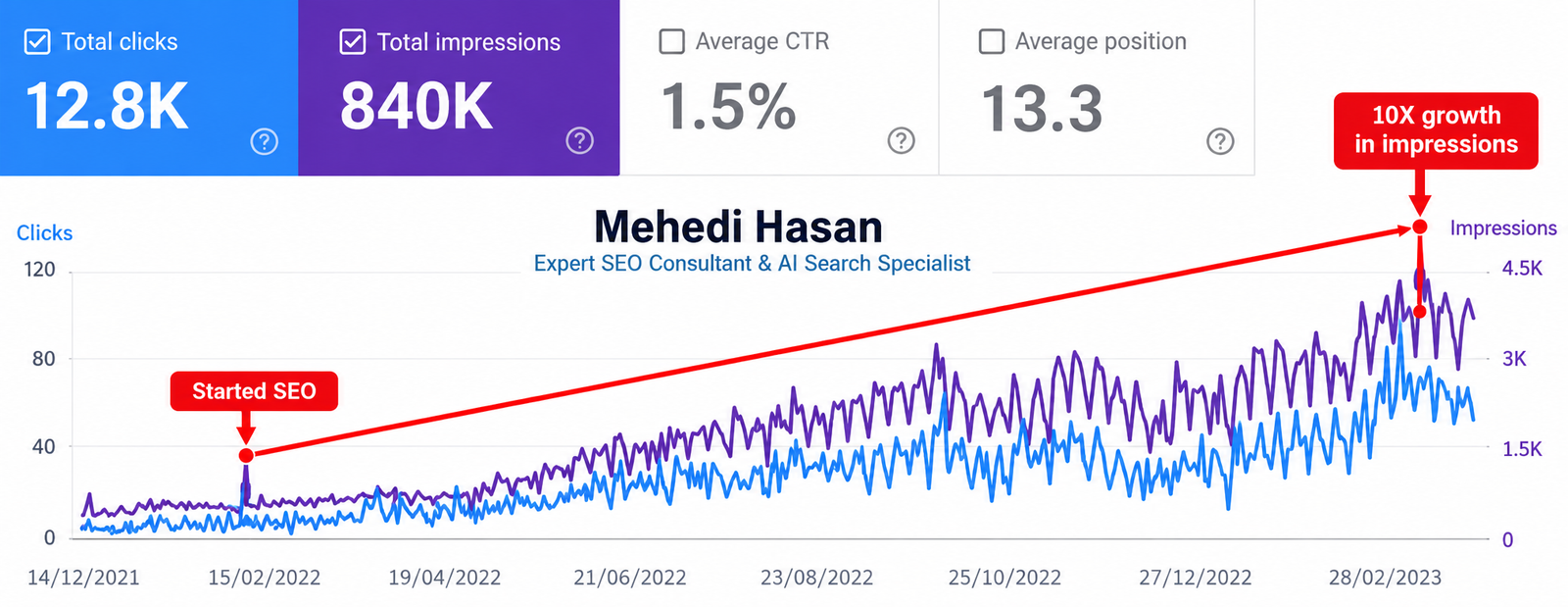
This case study examines a pharmaceutical manufacturer’s reported achievement of a tenfold increase in daily Google Search impressions through strategic search engine optimization.
The central objective was to expand the website’s visibility across relevant pharmaceutical searches and establish a stronger foundation for sustainable organic discovery.
1. The Business Challenge
Pharmaceutical manufacturers operate in a competitive digital environment where search visibility depends heavily on the quality, relevance, and credibility of published information.
A successful SEO campaign must address several potential barriers:
- Limited visibility for relevant pharmaceutical and manufacturing-related keywords.
- Insufficient content coverage across important product and industry topics.
- Weak internal linking between relevant pages.
- Opportunities to improve page titles, headings, and content structure.
- Technical issues that may restrict efficient crawling and indexing.
- The need to demonstrate subject-matter expertise and trustworthy information.
2. Strategic SEO Framework
Phase 1: SEO Audit and Opportunity Assessment
The priority in a structured pharmaceutical SEO campaign is understanding the website’s existing performance.
A comprehensive assessment should examine:
- Google Search Console performance trends.
- Existing keyword rankings and search queries.
- Index coverage and crawlability.
- Page-level content quality.
- Internal linking and website architecture.
- Competitor visibility and content gaps.
This assessment provides the evidence needed to prioritize improvements according to their potential search impact.
Phase 2: Keyword Research and Search Intent Mapping
Effective pharmaceutical SEO requires careful keyword segmentation.
Relevant keyword categories may include:
Commercial keywords: Pharmaceutical manufacturer, pharmaceutical contract manufacturing, and related supplier searches.
Product-related keywords: Pharmaceutical product categories, formulations, and manufacturing capabilities.
Informational keywords: Pharmaceutical manufacturing processes, quality standards, and industry-specific educational topics.
Keywords should be mapped to suitable landing pages to reduce unnecessary overlap and improve topical relevance.
Phase 3: On-Page SEO and Content Optimization
The next stage focuses on making important pages easier for search engines and potential customers to understand.
Recommended improvements include:
- Optimizing page titles and meta descriptions.
- Establishing clear heading hierarchies.
- Improving product and service page content.
- Addressing missing or duplicated information.
- Strengthening contextual internal links.
- Aligning each page with its primary search intent.
For pharmaceutical websites, technical accuracy and appropriate content review are particularly important. Medical or product claims should be supported by reliable evidence and reviewed by qualified personnel.
Phase 4: Technical SEO Improvements
Technical SEO supports the discoverability and accessibility of important website content.
Priority areas include:
- XML sitemap accuracy.
- Canonical URL implementation.
- Crawl and indexing controls.
- Mobile usability.
- Core Web Vitals and page performance.
- Structured data where applicable.
- Resolving broken links and unnecessary redirects.
These improvements help establish a more consistent foundation for organic search performance.
Phase 5: Content Authority and Internal Linking
A pharmaceutical manufacturer’s website can benefit from a content structure that connects product information, manufacturing capabilities, quality processes, and supporting educational resources.
A topic-based architecture helps users discover related information while making relationships between pages clearer to search engines.
The objective is to build useful, credible content coverage rather than publish large volumes of repetitive keyword-focused pages.
3. Campaign Results
Reported Outcome: 10× Daily Search Impression Growth
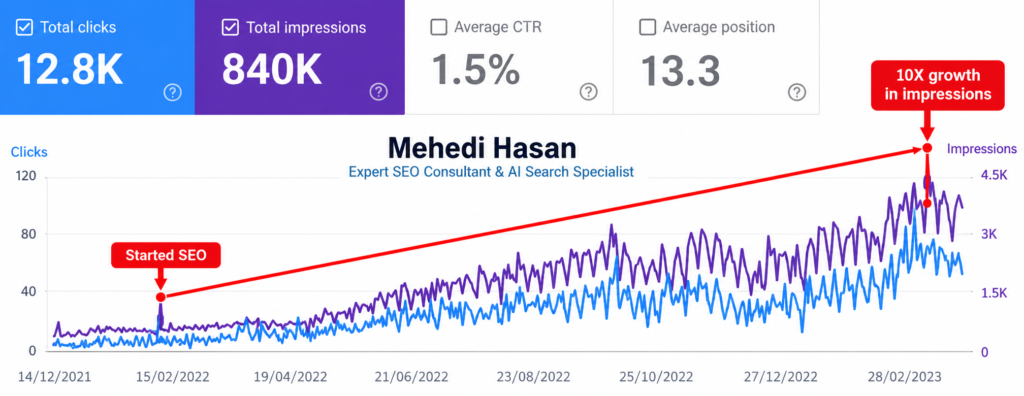
The source case study’s headline reports that daily Google Search impressions increased by a factor of ten.
This represents a substantial improvement in how frequently the website appeared in Google Search results.
| Performance Indicator | Reported Result |
| Daily Google Search Impressions | 10× growth |
| Relative Impression Increase | Approximately 900% |
| Organic Click Growth | Not yet verified |
| Campaign Duration | Not yet verified |
| Keyword Ranking Improvements | Not yet verified |
| Organic Leads or Conversions | Not yet verified |
Measurement note: A tenfold increase in impressions means the final daily impression count was ten times the initial count. It does not automatically establish equivalent growth in clicks, organic traffic, or business revenue.
4. Business Significance
Greater search visibility can create important opportunities for pharmaceutical manufacturers.
Expanded discoverability: More appearances in relevant search results increase opportunities for potential customers and industry stakeholders to encounter the brand.
Broader keyword coverage: A well-structured content strategy can help the website appear for a wider range of product, manufacturing, and industry-related searches.
Improved digital foundations: Technical and content improvements can make future SEO activity easier to scale and maintain.
Long-term acquisition potential: Better organic visibility may support lead generation, although conversion performance must be measured separately.
5. Key Lessons
This case study illustrates several important principles of pharmaceutical SEO.
First, visibility growth requires a coordinated approach across technical SEO, content relevance, and information architecture.
Second, search intent should guide keyword targeting. Different audiences, including procurement teams, business partners, and researchers, may require different types of information.
Third, content credibility is especially important in pharmaceutical and health-related subjects.
Finally, Google Search impressions are an important visibility metric, but clicks, qualified traffic, enquiries, and conversions provide a more complete picture of commercial performance.
Conclusion
The reported tenfold increase in daily Google Search impressions demonstrates the potential impact of a focused SEO initiative within pharmaceutical manufacturing.
A sustainable strategy should combine technical accessibility, clear keyword targeting, relevant content, and credible information.
For pharmaceutical businesses seeking to improve organic discoverability, the priority is to build a website that search engines can understand and prospective customers can trust.