


Executive Summary
A manufacturer operating in the competitive automotive parts industry needed to strengthen its visibility in organic search and attract potential customers searching for relevant products and solutions.
The SEO campaign focused on resolving technical website issues, identifying commercially valuable keywords, improving existing content, and strengthening the website’s internal linking structure.
Over a three-month period, the published campaign reported a substantial increase in search visibility.
Key Results:
- 155.7% growth in organic search impressions.
- 330,000 additional impressions between the reported baseline and final measurement.
- 542,000 search impressions, compared with 212,000 initially.
- Multiple important keywords achieved top-three Google rankings.
- Additional transactional keywords entered the top 10 search results.
These outcomes indicate significant improvements in search visibility and keyword positioning.
1. Client Background
The client was an established automotive parts manufacturer seeking to improve its online visibility within a highly competitive industry.
For manufacturers, organic search provides an opportunity to reach potential customers who are actively researching automotive components, comparing suppliers, or looking for specific product solutions.
However, achieving strong search visibility requires more than publishing product information. Websites must meet technical search engine requirements, address relevant search intent, and provide a clear structure that helps users and search engines navigate their content.
The campaign was designed to address these requirements and improve the manufacturer’s competitive position in organic search.
2. The Challenges
Challenge 1: High Industry Competition
The automotive parts industry includes established manufacturers, distributors, and specialized suppliers competing for similar search queries.
The website needed a more focused SEO strategy to compete for relevant search positions.
Challenge 2: Limited Visibility for Transactional Keywords
Commercially relevant search queries are particularly important because they can attract visitors who are closer to making purchasing or supplier-selection decisions.
Identifying and prioritizing these keywords was a central challenge.
Challenge 3: Technical SEO Deficiencies
The website experienced technical issues affecting loading performance and user experience.
Addressing site speed and Core Web Vitals was therefore included in the optimization strategy.
Challenge 4: Content and Website Structure
Existing pages required improvements to better address search intent, while the internal linking structure needed refinement to support navigation and search engine discovery.
3. SEO Strategy and Implementation
The campaign combined technical improvements, keyword targeting, content development, and internal linking.
Phase 1: Comprehensive SEO Audit
The initial work focused on evaluating the website’s technical condition, existing content, and organic search opportunities.
The audit helped identify areas requiring attention and provided direction for subsequent optimization.
Key activities included:
- Reviewing technical SEO performance.
- Assessing existing website content.
- Identifying optimization opportunities.
- Evaluating competitors’ keyword strategies.
- Prioritizing issues affecting organic visibility.
Phase 2: Technical SEO Optimization
Technical improvements focused on addressing website speed, loading problems, and Core Web Vitals.
The objective was to improve the website’s technical performance and provide a better experience for visitors.
These improvements also supported the broader effort to make important website pages more accessible and effective in organic search.
Phase 3: Keyword Research and Competitive Analysis
Keyword research prioritized search queries with strong transactional intent.
Competitor analysis helped identify valuable keyword opportunities and inform the optimization of important pages.
The strategy emphasized search relevance and commercial value rather than pursuing search volume alone.
Phase 4: Content and On-Page Optimization
Existing high-priority pages were improved with content aligned to user search intent.
This involved strengthening page relevance and ensuring that content addressed the information users were seeking.
The objective was to help important pages compete for more relevant keyword positions.
Phase 5: Strategic Internal Linking
The website’s internal linking structure was improved to create clearer connections between relevant pages.
This supported easier navigation and helped distribute internal link equity throughout the website.
Internal linking was treated as part of the broader SEO strategy rather than as an isolated activity.
4. Campaign Results
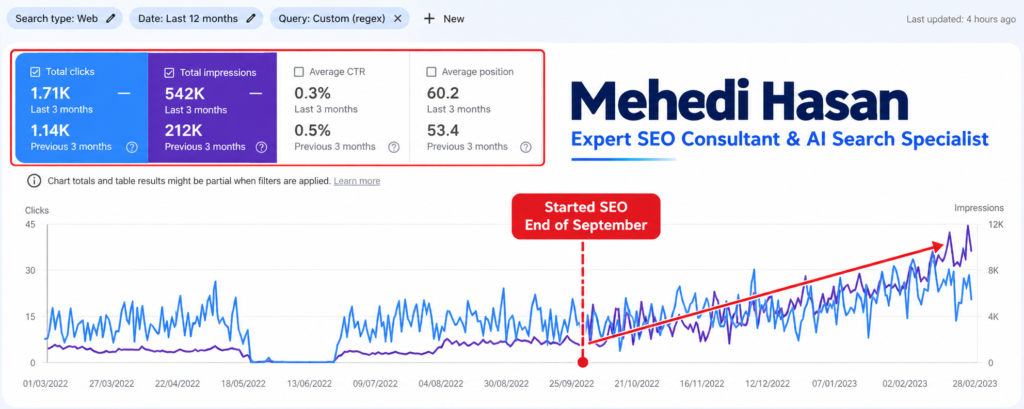
The published results demonstrated substantial growth in organic search visibility during the three-month campaign.
Result 1: Organic Search Impressions Increased by 155.7%
Google Search impressions increased from approximately 212,000 to 542,000.
This represents an increase of 330,000 impressions, equivalent to approximately 155.7% growth.
The improvement indicates that the website appeared more frequently in Google search results during the reported comparison periods.
Result 2: Improved Rankings for Important Keywords
Several important keywords reportedly achieved positions within Google’s top three organic search results.
This suggests improved visibility for search terms relevant to the manufacturer’s business.
Result 3: New Transactional Keywords Reached the Top 10
The campaign also reported top-10 rankings for additional keywords with strong transactional intent.
These rankings expanded the website’s visibility for searches potentially associated with commercial opportunities.
5. Business Impact
The campaign strengthened the manufacturer’s organic search presence in three important ways.
Greater search visibility: More frequent appearances in Google search results increased the potential for prospective customers to discover the manufacturer’s website.
Improved competitive positioning: Higher rankings for important keywords strengthened the website’s presence alongside competing automotive businesses.
Expanded commercial search coverage: Additional transactional keyword rankings created opportunities to reach users searching for relevant products and solutions.
Although these outcomes are commercially valuable, the published data does not establish how much additional website traffic, lead generation, or revenue resulted from the campaign.
6. Key Takeaways
This campaign illustrates the value of combining multiple SEO disciplines within a coordinated strategy.
Technical SEO improvements helped address website performance issues. Keyword research and competitor analysis provided direction for targeting relevant search opportunities. Content optimization improved page relevance, while internal linking supported website structure and navigation.
Together, these activities coincided with substantial improvements in reported search impressions and keyword rankings.
The results also demonstrate why SEO performance should be evaluated using multiple indicators, including search visibility, keyword positions, organic clicks, qualified leads, and conversions.
7. Conclusion
Within three months, the automotive parts manufacturer’s reported organic search impressions increased by 155.7%, while several important keywords achieved stronger positions in Google search results.
The campaign provides an example of how coordinated technical SEO, keyword research, content optimization, and internal linking can support measurable improvements in search visibility within a competitive manufacturing sector.