

Executive Summary
In May 2023, an electronics manufacturing company began a strategic SEO initiative to strengthen its organic search presence and improve visibility among potential B2B customers.
Operating in a technically specialized and competitive industry, the business needed a more structured approach to reaching users searching for electronic components, production equipment, and related manufacturing solutions.
The campaign focused on developing a comprehensive keyword strategy, organizing content into relevant topic clusters, improving on-page SEO, and establishing stronger internal connections between related pages.
Following Google’s August 2023 Core Update, the website recorded substantial improvements in organic search performance.
Key Results:
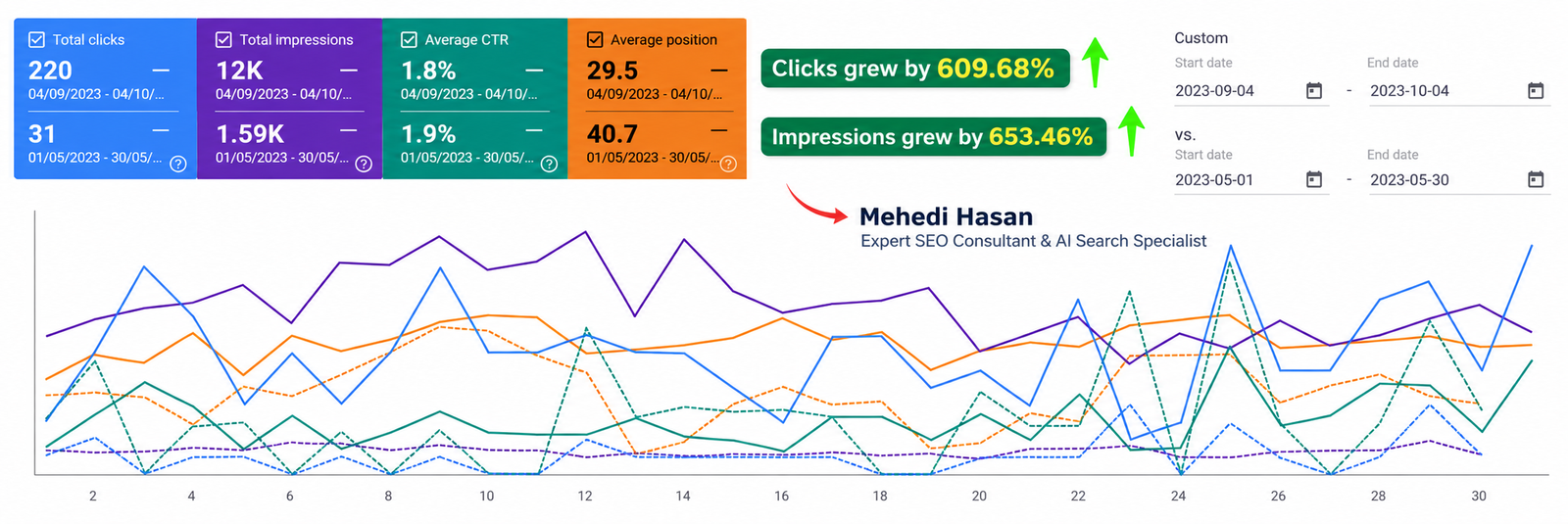
- 653% increase in organic search impressions
- 609% increase in organic search clicks
- Stronger reported organic visibility following the August 2023 Google Core Update
These results demonstrate the potential impact of a structured, search-intent-driven SEO strategy in a specialized B2B manufacturing market.
1. Business Background
The client was an electronics manufacturer operating in a competitive B2B environment.
In this industry, search visibility plays an important role in connecting manufacturers with procurement professionals, technical specialists, engineers, and businesses researching manufacturing solutions.
Potential customers often conduct detailed online research before contacting suppliers. Their searches may involve product specifications, equipment capabilities, technical requirements, and comparisons between available solutions.
For manufacturers, appearing in relevant search results creates opportunities to build awareness and attract qualified prospective customers.
The SEO initiative therefore focused on improving the website’s ability to reach its intended audience through relevant organic search queries.
2. The Business Challenge
The central challenge was to strengthen the manufacturer’s visibility in a specialized market where search queries are often technical and highly specific.
The campaign addressed several important SEO priorities.
Developing a clearer keyword strategy
The business needed a systematic way to identify relevant search terms, including variations connected to electronic components and production equipment.
Aligning content with search intent
Technical audiences search for different types of information depending on their stage of research. Content needed to address these information needs more effectively.
Building topical relevance
A collection of disconnected pages can make it difficult to communicate the full scope of a manufacturer’s expertise. A more organized content structure was needed to establish stronger connections between related subjects.
Strengthening organic discoverability
The website required consistent on-page optimization and internal linking to help search engines discover, interpret, and prioritize relevant content.
3. SEO Objectives
The campaign was structured around four primary objectives:
- Increase organic visibility for industry-relevant search queries.
- Improve the website’s ability to attract searchers interested in electronics manufacturing solutions.
- Build stronger topical coverage through organized, useful content.
- Establish a sustainable SEO foundation capable of supporting long-term organic growth.
The broader business objective was to improve discoverability among relevant B2B audiences, rather than focusing exclusively on search rankings.
4. SEO Strategy and Implementation
Phase 1: Comprehensive Keyword Research and Topical Mapping
The initial phase focused on identifying relevant keywords and understanding how different search terms related to the manufacturer’s products and industry.
A topical map was developed to organize primary keywords, related phrases, and relevant variations.
This approach provided a clearer structure for determining which subjects the website should cover and how individual pages could support broader topic areas.
Strategic purpose: Establish a search-focused content structure based on relevant industry terminology and user information needs.
Phase 2: Search Intent-Based Content Clustering
Following the keyword research, the content strategy was organized around related topics.
The campaign emphasized content clusters connected to electronic production equipment and relevant manufacturing subjects.
Grouping content around related themes helped establish logical relationships between individual pages and broader industry topics.
Instead of treating each keyword as an isolated opportunity, the strategy considered how multiple searches could be addressed through coordinated content coverage.
Strategic purpose: Improve topical relevance and help search engines understand the website’s subject-matter focus.
Phase 3: Development of Relevant, High-Value Content
Content development emphasized relevance, usefulness, and alignment with searcher intent.
The goal was to provide information that addressed the needs of users researching electronic components and manufacturing equipment.
For a technical B2B audience, useful content must communicate clearly while remaining relevant to the search query.
The campaign therefore prioritized informative content over publishing pages solely for keyword coverage.
Strategic purpose: Increase the relevance and usefulness of the website’s content for its intended audience.
Phase 4: On-Page SEO Optimization
The next phase focused on applying SEO best practices across relevant website content.
The optimization effort aimed to improve how pages communicated their topics to both search engines and users.
Content was aligned with the keyword strategy and organized to support clearer interpretation of its subject matter.
Strategic purpose: Strengthen page-level relevance and support improved organic search visibility.
Phase 5: Strategic Internal Linking
Internal linking was another important part of the campaign.
Related pages were connected to create clearer navigation paths and reinforce relationships between relevant topics.
A structured internal linking approach can help search engines discover content, understand site architecture, and recognize connections between pages.
It can also help visitors navigate from broader topics to more specific information.
Strategic purpose: Improve content discoverability and strengthen the website’s overall topical structure.
5. Performance Following Google’s August 2023 Core Update
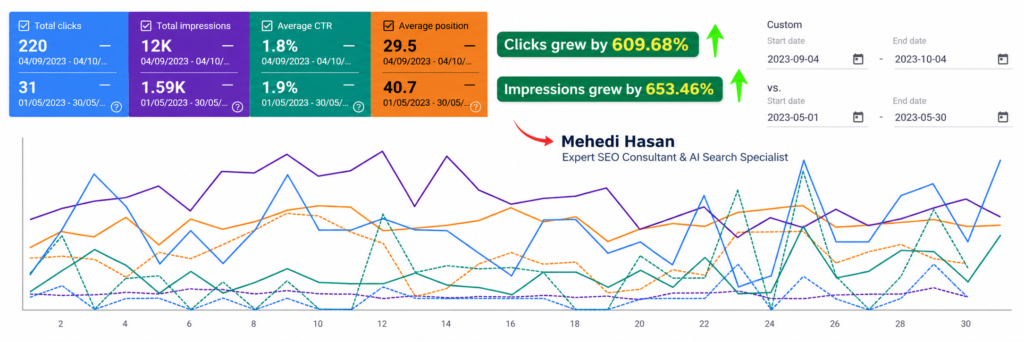
Google’s August 2023 Core Update provided an important reference point for evaluating the campaign’s performance.
The original project report states that the website experienced substantial organic search growth following the update.
Reported Organic Search Results
| Performance Metric | Reported Growth |
| Organic Search Impressions | +653% |
| Organic Search Clicks | +609% |
Search Impressions: +653%
The increase in impressions indicates that the website appeared substantially more frequently in Google Search results during the reported comparison.
This suggests a significant expansion in search visibility.
Organic Search Clicks: +609%
The increase in organic clicks indicates that more users reached the website through unpaid Google Search results.
Together, these metrics show considerable growth in the website’s reported organic search exposure and traffic.
The results were observed in the context of Google’s August 2023 Core Update. However, the available case study does not establish that the algorithm update itself caused the growth.
6. Strategic Analysis
Several elements of the SEO strategy provide a plausible explanation for the positive performance trend.
A structured keyword foundation
The topical map established a more organized approach to keyword targeting and content planning.
Improved alignment with search intent
Creating content around relevant user needs helped focus the website on topics meaningful to its intended audience.
Greater topical coverage
Content clustering provided a framework for addressing related industry subjects through connected pages.
Consistent SEO implementation
On-page optimization and internal linking supported the broader content strategy.
Focus on sustainable practices
The campaign emphasized relevant content, logical site structure, and established SEO principles rather than relying on short-term manipulation tactics.
Although the original report does not isolate the impact of each activity, these components collectively formed the reported optimization approach.
7. Business Impact
The strongest documented outcome was the substantial increase in organic search visibility and clicks.
For a B2B electronics manufacturer, improved organic visibility can create additional opportunities to reach prospective customers researching products, equipment, and technical solutions.
More search traffic may also expand opportunities for inquiries and lead generation.
However, the original report does not provide verified figures for leads, conversion rates, customer acquisition, or revenue. Those outcomes should therefore be treated as potential business benefits rather than confirmed campaign results.
8. Key Takeaways
This case study highlights several practical lessons for B2B manufacturers seeking to improve their organic search performance.
Search intent should guide content planning. Understanding what prospective customers are searching for helps businesses develop more relevant content.
Topical organization matters. A connected content strategy provides a stronger structure than a collection of unrelated keyword-focused pages.
Technical subjects require useful information. Specialized audiences benefit from content that addresses their actual research needs.
Internal linking supports content discovery. Connecting relevant pages strengthens navigation and helps communicate relationships between topics.
Sustainable SEO requires consistency. A coordinated approach to keyword research, content development, and on-page optimization can support long-term search visibility.
9. Conclusion
The electronics manufacturer’s SEO campaign illustrates how a structured content and optimization strategy can coincide with significant improvements in organic search performance.
Beginning in May 2023, the campaign concentrated on keyword research, topical mapping, intent-focused content, on-page optimization, and strategic internal linking.
Following Google’s August 2023 Core Update, the website reported a 653% increase in organic impressions and a 609% increase in organic clicks.
The case demonstrates the value of organizing SEO around relevant search demand, useful content, and a coherent website structure.
For electronics manufacturers and other technically specialized B2B businesses, these principles provide a practical foundation for improving organic search visibility.