

Project Overview
RAPPID, a technology-focused business, faced a significant challenge in establishing its presence on Google. Despite offering specialized technology-related services, its website had limited organic search visibility and was not ranking for several of its targeted keywords.
The challenge was particularly important because RAPPID operated in a specialized market where relevant search queries could have relatively low search volumes but strong commercial intent.
The SEO initiative focused on resolving technical website issues, improving existing content, strengthening the site’s search presence, and establishing a consistent content publishing strategy.
The objective was to build a stronger foundation for sustainable organic growth while making RAPPID’s services easier for potential customers to discover.
1. The Challenge: Limited Organic Visibility in a Specialized Market
Before the SEO improvements, RAPPID struggled to establish meaningful rankings for its target search terms.
Several technical and content-related limitations affected the website’s ability to compete in organic search.
Key Challenges Identified
Limited Keyword Rankings
The website had little to no visibility for its priority keywords, reducing opportunities to attract potential customers through Google.
Technical SEO Issues
The initial website audit identified problems affecting search engine accessibility and overall technical quality, including:
- Broken internal or external links.
- Missing XML sitemap.
- Missing robots.txt file.
- Technical issues requiring improvements before further optimization.
Content Relevance and Search Intent
Existing website content required refinement to better address the questions, requirements, and search intent of RAPPID’s target audience.
Limited Supporting Content
The website needed a more consistent publishing strategy to address informational searches and support its core service pages.
Online Business Presence
RAPPID also needed improvements to its business profiles and broader search presence to strengthen discoverability and provide consistent business information.
2. Project Objectives
The SEO strategy was developed around five primary objectives:
- Improve organic keyword rankings for relevant technology-related search queries.
- Resolve technical issues that could affect crawling, indexing, and website usability.
- Optimize service-page content to better match relevant search intent.
- Develop an ongoing content strategy to attract users researching technology solutions.
- Establish a stronger, more consistent presence across Google and Bing.
Rather than focusing exclusively on high-volume keywords, the strategy prioritized relevance and the potential commercial value of targeted search queries.
3. SEO Strategy and Implementation
Phase 1: Technical SEO Audit and Website Improvements
The project began with a comprehensive technical SEO assessment to identify issues limiting the website’s organic performance.
Key Actions
Broken Link Resolution
Identified and addressed broken links to improve navigation, reduce unnecessary dead ends, and support a more reliable user experience.
XML Sitemap Implementation
Addressed the missing XML sitemap to help search engines discover important website URLs.
Robots.txt Configuration
Addressed the missing robots.txt file and established clearer crawler instructions.
Technical SEO Foundation
Resolved identified technical issues to create a more reliable foundation for subsequent content and on-page improvements.
Strategic Purpose
These improvements helped establish a more search-engine-friendly website structure and supported the discovery of important pages.
Phase 2: On-Page SEO and Content Optimization
Once the technical foundation had been addressed, attention shifted toward improving the relevance and usefulness of existing website content.
The goal was to align important pages with the needs of users searching for RAPPID’s technology-related services.
Key Actions
- Reviewed existing website content against target search intent.
- Refined service-page messaging to better explain relevant solutions.
- Improved the relevance and clarity of existing content.
- Focused primary service pages on commercially relevant user needs.
- Supported the website’s ability to communicate its services more effectively.
Strategic Purpose
Search visibility depends on more than the presence of keywords. Pages must address the needs behind relevant searches.
By improving content relevance, RAPPID was better positioned to compete for its priority search terms while providing a clearer experience for prospective customers.
Phase 3: Google Business Profile and Bing Places Optimization
The project also included establishing or improving RAPPID’s presence on Google Business Profile and Bing Places.
Although RAPPID was not primarily positioned as a local business, the initiative aimed to improve the consistency and discoverability of its business information across search platforms.
Key Actions
- Set up business profiles on supported platforms.
- Improved the availability of business information.
- Supported a more consistent search presence across Google and Bing.
Strategic Purpose
Accurate business profiles can support brand discoverability and provide useful information to potential customers.
Business Profile eligibility and verification must follow the respective platform’s guidelines.
Phase 4: Strategic Blogging and Informational Content
A recurring blogging strategy was introduced to expand RAPPID’s coverage of relevant technology topics.
Publishing Frequency: Three Blog Posts Per Month
The content strategy focused on addressing technology-related questions and topics relevant to prospective customers.
Key Actions
- Established a recurring content publishing schedule.
- Developed informational content addressing relevant technology questions.
- Used blog content to reach audiences at earlier stages of their research.
- Maintained a distinction between educational blog content and conversion-focused service pages.
Strategic Purpose
Service pages and blog content serve different search intents.
Service pages focus on users evaluating solutions or providers, while informational articles help attract users who are still researching a problem.
This approach allowed RAPPID to expand its topical coverage without relying exclusively on its core service pages.
4. SEO Results and Performance Improvements
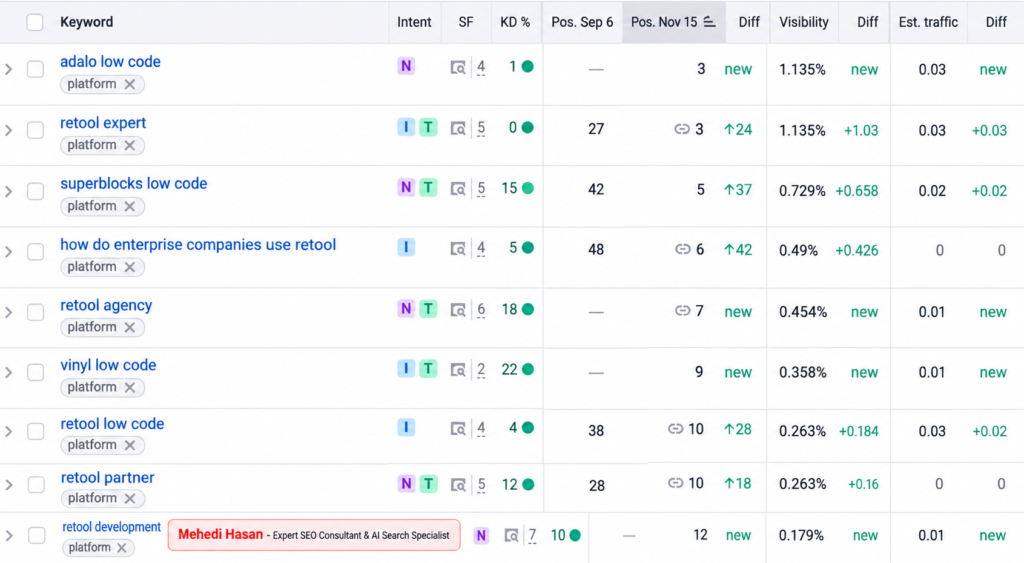
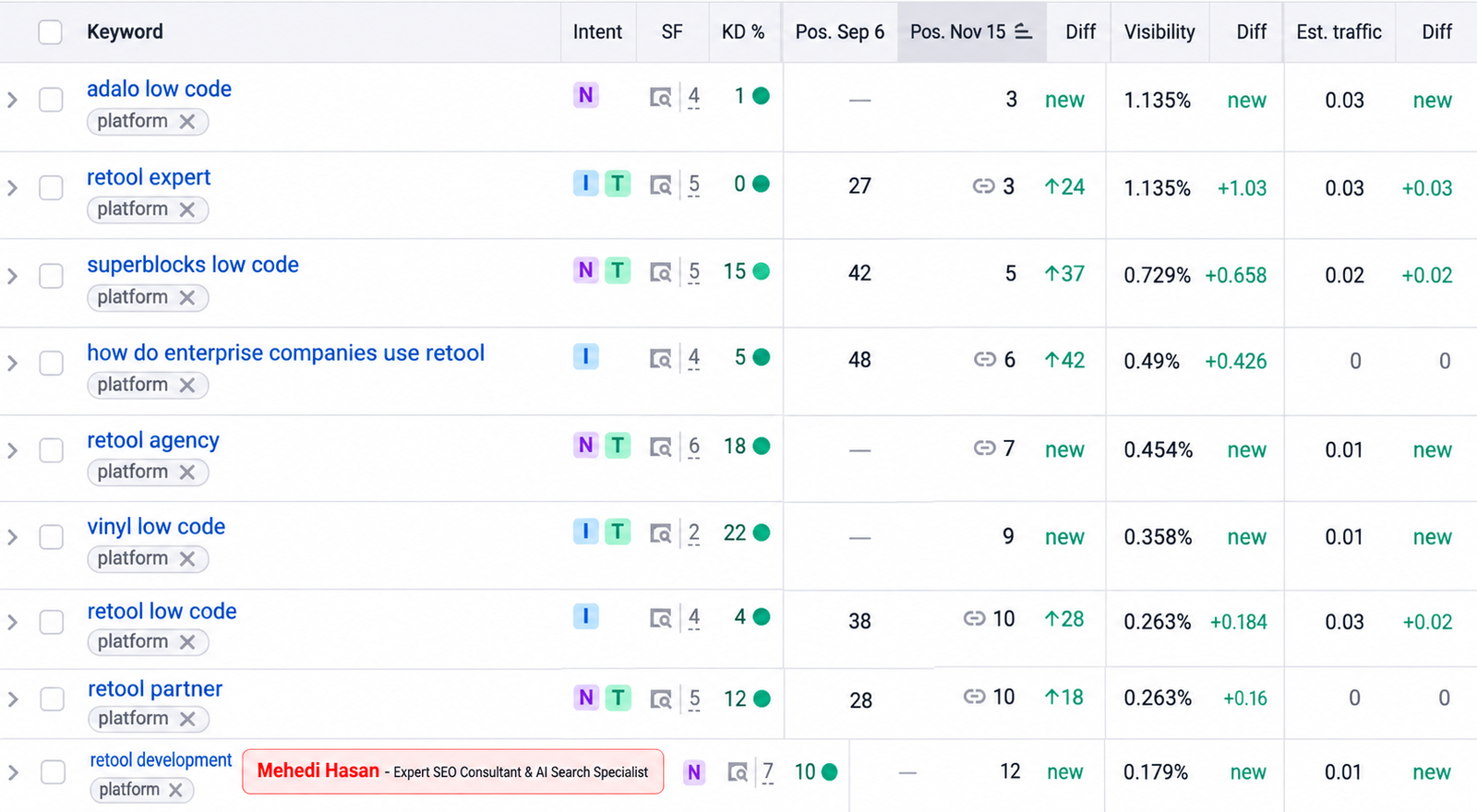
Following the implementation of technical fixes and content improvements, RAPPID experienced positive movement in organic keyword rankings.
Result 1: Improved Google Keyword Rankings
One of the most important outcomes was the movement of previously unranked target keywords into prominent positions in Google’s search results.
The original project report states that multiple targeted terms reached top-ranking positions.
This represented a meaningful improvement in visibility compared with the website’s initial search presence.
Result 2: Stronger Organic Search Presence
Improved keyword positioning made RAPPID more discoverable for relevant technology-related searches.
This was particularly valuable in a specialized market where search relevance may matter more than raw search volume.
Result 3: Improved Content Alignment
Updates to existing content helped the website communicate its services more clearly and address relevant user questions.
The content strategy also established a framework for publishing educational resources alongside commercially focused pages.
Result 4: Stronger Technical Foundation
Addressing broken links, the XML sitemap, and robots.txt configuration improved the website’s technical SEO foundation.
These changes supported future optimization efforts and reduced several identified technical limitations.
Result 5: Consistent Content Development
The introduction of a three-posts-per-month blogging schedule established a repeatable approach to developing relevant content.
This created opportunities to target additional informational queries and support the website’s longer-term organic search strategy.
5. Why This SEO Strategy Worked
The strategy addressed multiple factors affecting RAPPID’s organic search performance rather than concentrating on keyword rankings alone.
Technical SEO First
Fixing foundational website issues before expanding optimization efforts reduced avoidable technical barriers.
Search Intent Alignment
Refining existing content helped make important pages more relevant to the audience’s search needs.
Commercially Relevant Keywords
The project recognized that lower-volume keywords can still be valuable when they closely match the services a business provides.
Informational Content Development
Regular blogging expanded the website’s ability to address questions beyond its primary commercial pages.
Consistent Search Presence
Improving business information across search platforms supported broader brand discoverability.
Together, these activities created a more complete organic search strategy.
6. Business Impact
The most clearly documented business outcome was stronger organic keyword visibility.
Improved rankings increased RAPPID’s opportunity to appear when potential customers searched for relevant technology solutions.
The project also established a better technical and content foundation for future search growth.
However, the available project information does not provide verified figures for organic traffic growth, qualified leads, conversion rates, or revenue.
These outcomes would require supporting data from Google Search Console, Google Analytics, and the client’s lead-tracking systems.
7. Key Takeaways
The RAPPID project demonstrates several important principles of effective SEO.
- Technical issues should be addressed early. Broken links and missing crawler-supporting files can undermine the quality of a website’s technical foundation.
- Search relevance matters more than keyword volume alone. Specialized businesses can benefit from ranking for narrowly targeted queries with strong commercial relevance.
- Content should serve distinct user needs. Commercial service pages and educational articles can work together to support different stages of the customer journey.
- Sustainable SEO requires consistency. Regular content development and ongoing optimization provide a framework for long-term improvement.
- Rankings are only one measure of success. Organic traffic, qualified inquiries, and conversions are also necessary to establish the full commercial impact of an SEO campaign.
8. Conclusion
The RAPPID SEO project illustrates how coordinated technical optimization, content improvements, and a structured publishing strategy can improve organic search visibility in a specialized technology market.
By addressing technical weaknesses, refining existing content, improving business listings, and introducing regular informational publishing, the initiative helped RAPPID move from limited keyword visibility toward stronger positions in Google’s organic search results.
The project demonstrates the value of combining technical SEO with search-intent-driven content development to establish a stronger foundation for ongoing organic growth.